
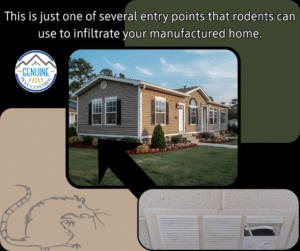
The Most common ways rats get inside a manufactured or mobile home:
Rats are experts at finding ways into elevated manufactured and mobile homes. Here are the most frequent entry points that allow rodents access:
- Gaps and Damage in Skirting
The open space beneath a manufactured home is a prime location for rodents. If the perimeter skirting is loose, damaged, or has even a minor gap, rats will use it to slip right into the crawlspace.
- Openings Around Utility Lines
Rats often gain entry through poorly sealed areas where essential utility lines penetrate the home’s exterior, including:
- Water pipes
- Electrical conduits
- Gas lines
A gap as small as a ½-inch is sufficient for a rat to squeeze through.
- Torn or Missing Vent Screens
If the screens or covers on crawlspace vents are damaged or absent, rats have a clear and easy path to the underside of the home.
- Misaligned Exterior Doors
Doors that do not seal tightly against the threshold are a major entry point. This is especially common in manufactured homes where shifting or settling over time can cause doors to become misaligned.
- Chewed Holes in Weak Underbelly Material
The underside of manufactured homes often utilizes softer construction materials, like belly board. Rats can exploit any weak spots by chewing through them to access the insulation and flooring above.o
- Gaps in Roofs and Eaves (Especially Near Attachments)
If your home has an attached carport, awning, or porch, rats can climb up and discover openings in:
- Roof edges
- Soffits
- Ventilation gaps
- Unsecured Plumbing Access Panels
Access panels used for water heaters or tubs are frequently loosely fitted. This creates simple entry points into the home’s interior wall cavities.